Lighting Up Lives: How African Clean Energy is Transforming Cooking in Rural Lesotho
April 2025 |
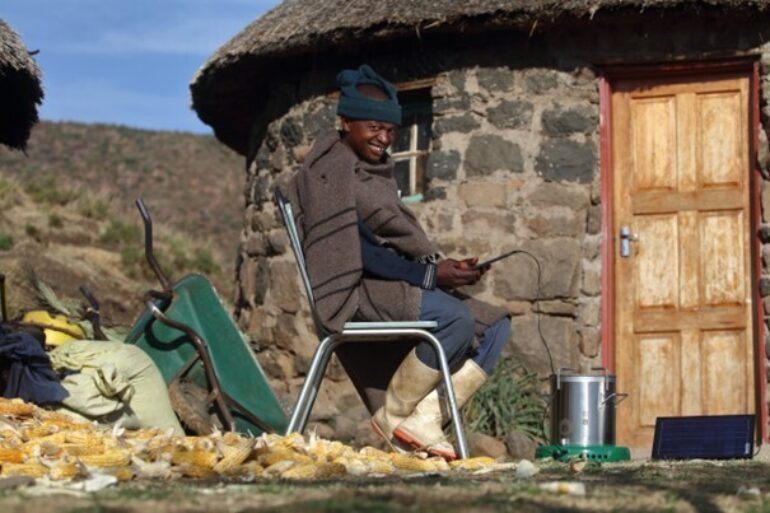
In rural Lesotho, where 70% of the population lives, access to modern energy remains a significant challenge. Most households rely on firewood and crop residues burned in traditional three-stone fires for cooking, while only about a third are connected to the electricity grid. This dependence on open fires contributes heavily to indoor air pollution — resulting in 224 deaths per 100,000 people, the second-highest rate in Africa — and accelerates deforestation and energy poverty. Clean cooking solutions, such as fuel-efficient stoves, help to reduce smoke exposure and the burden of fuel collection, in particular on women and children. Additionally, integrated small-scale lighting and phone charging features provide households with affordable basic energy access where none existed before, supporting connectivity and opening possibilities that were previously out of reach.
Founded in Lesotho in 2011, African Clean Energy (ACE) set out to change this reality. ACE’s mission was clear from the start: To empower communities, improve health outcomes, protect nature and raise standards of living through providing access to clean, safe and affordable energy for rural and off-grid communities across developing nations. Driven by witnessing the problem firsthand, ACE developed the ACE One — a solar-biomass hybrid energy system designed to provide clean, efficient, and affordable cooking solutions.
The ACE One cookstove, equipped with a solar-powered fan, burns biomass more efficiently, reducing harmful smoke and cutting fuel consumption. Beyond cooking, the device also charges phones and powers an LED light, empowering rural households with basic energy needs. By integrating solar power, the ACE One replaces expensive and polluting lighting fuels with renewable alternatives, helping families save money and breathe cleaner air.
However, the initial premium cost of the ACE One posed a challenge for widespread adoption. To overcome this, ACE embraced innovation once again — this time in financing. With support from EEP Africa, ACE developed an in-house built Pay-As-You Go (PAYG) platform, by integrating a built-in microprocessor in the ACE One, enabling a communication link with smartphones. The cookstoves were sold in a bundle with a smartphone including a pre-installed ACE Connect App. This mobile-based payment system enabled households to make small, manageable payments over time. The ACE Connect app not only made payments easy but also allowed for remote monitoring and the option to disable the unit if payments were missed — helping ensure financial sustainability. A reliable after-sales service and repair system is also in place, further strengthening user trust and supporting long-term success. In addition, the app also enabled ACE to assign fuel purchases to individual customer IDs, which more accurately verifies the fuel being consumed with each ACE One unit. Through this information and the usage data gathered through customer satisfaction surveys, it opened a range of opportunities for ACE to monetise their externalities.
Through this model, ACE has distributed around 2,600 new cookstoves in Lesotho, positively impacting over 13,000 lives. The data gathered during the pilot phase not only proved the affordability of the PAYG approach but also laid the foundation for the development of a carbon credit project, designed to further subsidise clean cooking solutions and sustainable fuel through carbon finance revenues.
By 2022, the success of the ACE Connect model, offering more than just PAYG functionality, had attracted additional investment, totalling over USD 6M. While ACE already had an established presence in Cambodia, Uganda, and Kenya, EEP Africa’s support enabled the piloting of the ACE Connect model, which was later implemented across these countries. This expansion also included setting up a local factory in Uganda and continued development of the ACE Connect app. Today, ACE has sold around 28,000 stoves through the EEP-supported PAYG model, with carbon credits helping make clean, safe and affordable energy even more accessible.
Judith Walker, COO of African Clean Energy, reflects on the journey:
EEP Africa allowed us to pilot a new innovation with risk mitigation. Without EEP Africa funding, we wouldn’t have been able to advance our technological development programme, which has ultimately furthered the growth and impact that we set out to achieve from day one.
At EEP Africa, we believe that innovative financing and sustainable technology solutions can break the cycle of energy poverty. The ACE One saves up to 85% of wood/charcoal and by providing customers with sustainably sourced biomass. ACE’s story is a testament to how targeted support and bold ideas can transform communities and create lasting change.
